Rosalind Franklin
and DNA
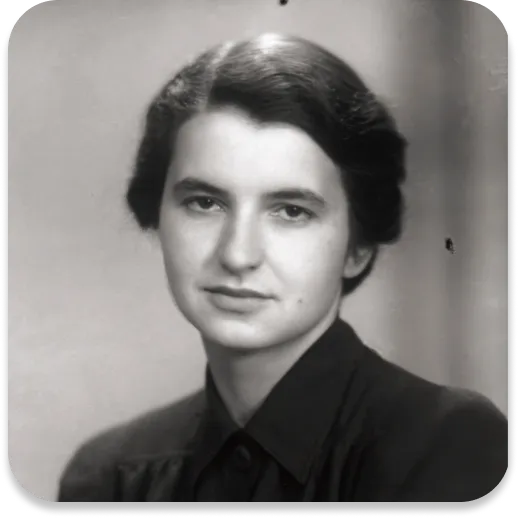


The Matilda Effect describes a very real phenomenon: discoveries made by women are often attributed to their male colleagues. The term comes from Matilda Joslyn Gage, a 19th-century American feminist, who already denounced this invisibilization.
From Rosalind Franklin, overshadowed in the discovery of DNA, to Jocelyn Bell Burnell, denied the Nobel for discovering pulsars, many scientists have seen their work minimized or erased.
This effect is not just historical — it persists today in laboratories, media, and textbooks. The man's name is cited, the woman's is forgotten. Recognizing the Matilda Effect means restoring the truth and giving justice to women who shaped science, often in the shadows.

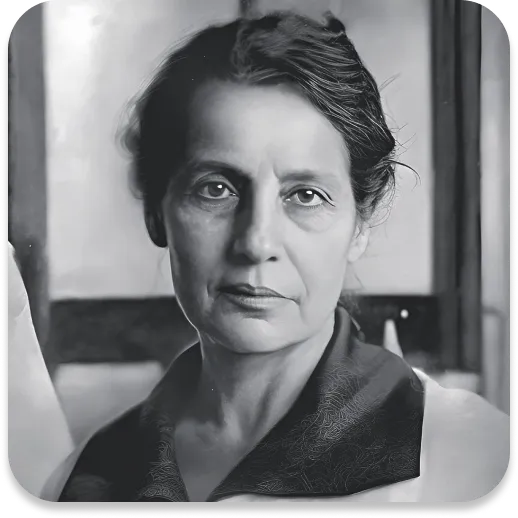
Role: American feminist activist and writer.
Key fact: She originated the concept; at the end of the 19th century, she denounced the erasure of women from history, particularly in science.
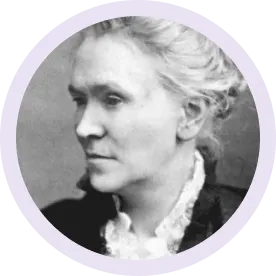
Role: Austrian physicist, pioneer of nuclear physics.
Key fact: Co-discovered nuclear fission with Otto Hahn, but never received the Nobel for this discovery.